How to Lose Weight: The Complete Guide
Your body uses energy from food all day. If you eat more energy than your body needs, the extra is stored as body fat. If you eat less, your body uses stored fat, and weight goes down. That is the entire mechanism.
By the end of this page you will know how much to eat each day, how to check whether your real meals match that number, and what to do when they do not.
Start here when
- You are a generally healthy adult aged 18 to 65.
- You want to know how much to eat before choosing what to eat.
- You are willing to write down your food for one week.
- You will check your weight over weeks, not after one morning.
Get medical help first if
NHS Better Health says people with special dietary requirements, medical needs, or an eating disorder should seek advice from a registered healthcare professional. The NHS also has separate nutrition guidance for pregnancy and breastfeeding.
- You are pregnant or breastfeeding.
- You have a medical condition or have been told to follow medical nutrition guidance.
- You have a history of disordered eating or current eating-disorder symptoms.
Outputs
- Know how many calories to eat each day.
- See which meals are pushing you over.
- Learn which food details actually matter for calories.
- Know what to check before eating even less.
Find your calorie target
Food contains energy. That energy is measured in units called calories, the number you see on food labels and restaurant menus.
Your body uses calories all day: breathing, walking, thinking, digesting. The NHS says it simply: if you eat more calories than your body uses, the extra is stored as body fat. If you eat fewer, your body burns stored fat for energy, and weight goes down.
Your calorie target is one number: how many calories to eat per day to start losing weight. It tells you how much to eat, not what.
Choose a first milestone and enter your current data.
What these words mean
- Calories: the energy in food. The number on the label.
- Calories in: everything you eat and drink.
- Calories out: everything your body uses (breathing, moving, digesting).
- Calorie target: how many calories to eat each day to lose weight.
- Deficit: eating less than your body uses. This is what makes weight go down over time.
How body weight changes
- Eat more calories than you use → body stores the extra as fat (NHS).
- Eat fewer calories than you use → body burns stored fat (NHS).
Pick a first goal you can reach
If you have a lot to lose, do not aim for the final number yet. NIDDK recommends starting with 5% to 10% of your current weight. For example, going from 90 kg to 85 kg. That is a realistic first target.
- Start at 90 kg: first milestone 85.5 kg or 81.0 kg.
- Start at 200 lb: first milestone 190 lb or 180 lb.
- Use 5% to 10% as the first phase even if the long-term goal is bigger.
Enter your real numbers
- Age: as you get older, your body uses slightly fewer calories at rest.
- Sex: men typically need more calories than women.
- Height: taller people need more calories.
- Current weight: this has the biggest effect on your calorie needs right now.
- Goal weight: your first checkpoint, not your final destination.
- Activity level: how much you move changes the number more than most people expect.
You need two scales
- Body-weight scale to check your weight trend.
- Kitchen scale for home-cooked food.
- One place to log every meal for seven days.
The body-weight baseline behind the inputs
The calculator only sees the inputs. If current weight is rounded down or activity is rounded up, the first target starts too high.
This was the body-weight baseline for the first calculation.
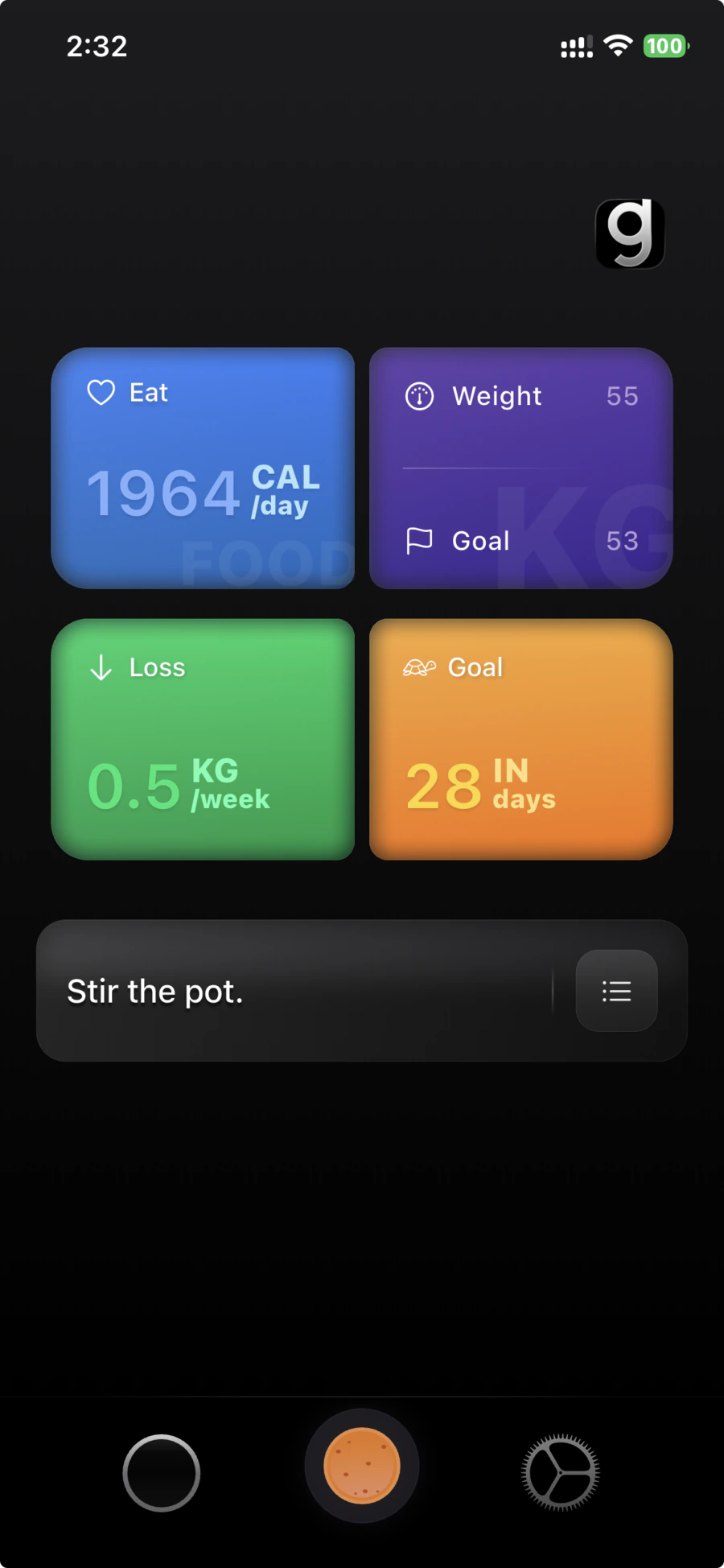
The calculator gives a starting target.
Use the calculator to get the first target.
Step 1
Starting information
Step 2
Goal weight or first milestone
Public guidance usually starts with a first phase goal. Choose a 5% or 10% milestone, or enter a custom goal if you already know it.
Step 3
Activity level
Step 4
Weekly pace
These pace options stay within the public-safe range used in this guide.
Track what you eat against the target
The calculator above gave you the daily calories required to start losing weight. That number only matters if you can compare it with what you actually eat. The NHS recommends keeping a food diary and weighing portions when you can.
That is why calorie-tracking apps exist. They turn food into numbers so you can compare the day against the target. Different apps do this in different ways: search a food database, pick a preset portion, scan a barcode, photograph the meal, or type what you ate.
I learned this during my own weight-loss journey. I tried calorie trackers. One helped me lose weight, so the method worked. The weak point was the logging flow: type a food name, choose a preset portion like 1 cup or 2 teaspoons, pick a meal label, then edit the entry until it roughly matched what I ate.
Camera logging looked like the shortcut. Take a photo, let the app estimate the meal. But a camera can only see what is visible. It cannot reliably see oil under the food, fat mixed into the dish, cooked weight, or what changed inside the portion. When the estimate is wrong, the time saved by scanning gets spent editing.
That is how Getter was born. Write the food first, with an amount when you know it. Getter calculates the intake. Then compare the day against the target and adjust the amount when you know more.
Log the Food to Confirm the Deficit
You must track the food to confirm you are in a deficit. If tracking is complicated, it will not last.
Getter Harmony turns the detail you know into the record you need: 20 g butter gives an exact amount, Sushi 316 kcal keeps the menu calorie, duvel 25 cl and 350 ml red wine log drinks, and tokwa sisig plus half rice, adobo baboy, half munggo work as meal names. Multiple foods can go in one entry.
Same food, different certainty
You ate a slice of butter.
20g butterKnown weightbutterStandard portionbutter 0p 8f 0cKnown macrosbutter 80 kcalKnown caloriesGetter Harmony AI logs all of them.
Write down what you ate exactly as you would describe it. Add raw or cooked when you know the form. If you weighed the food, match the entry to the scale.
Getter Harmony understands measured foods, menu calories, drinks, and meal names. Type however you normally describe food.
These are examples of how Getter Harmony handles different ways of describing food.
Amount already known
20 g butter100g cooked white riceIf you know the amount, enter it. Dense foods like butter and oil change calories fast.
Food known, amount not yet
half rice, adobo baboy, half munggotokwa sisigType the meal name. Add the amount later.
Calories already listed
Sushi 316 kcalSalmon Dill in Brioche 400 kcalIf a menu, label, or package gives calories, use that number. That number is more accurate than a lookup.
Drink entries
duvel 25 cl350 ml red wineDrinks add calories. Log them with food.
Data Accuracy
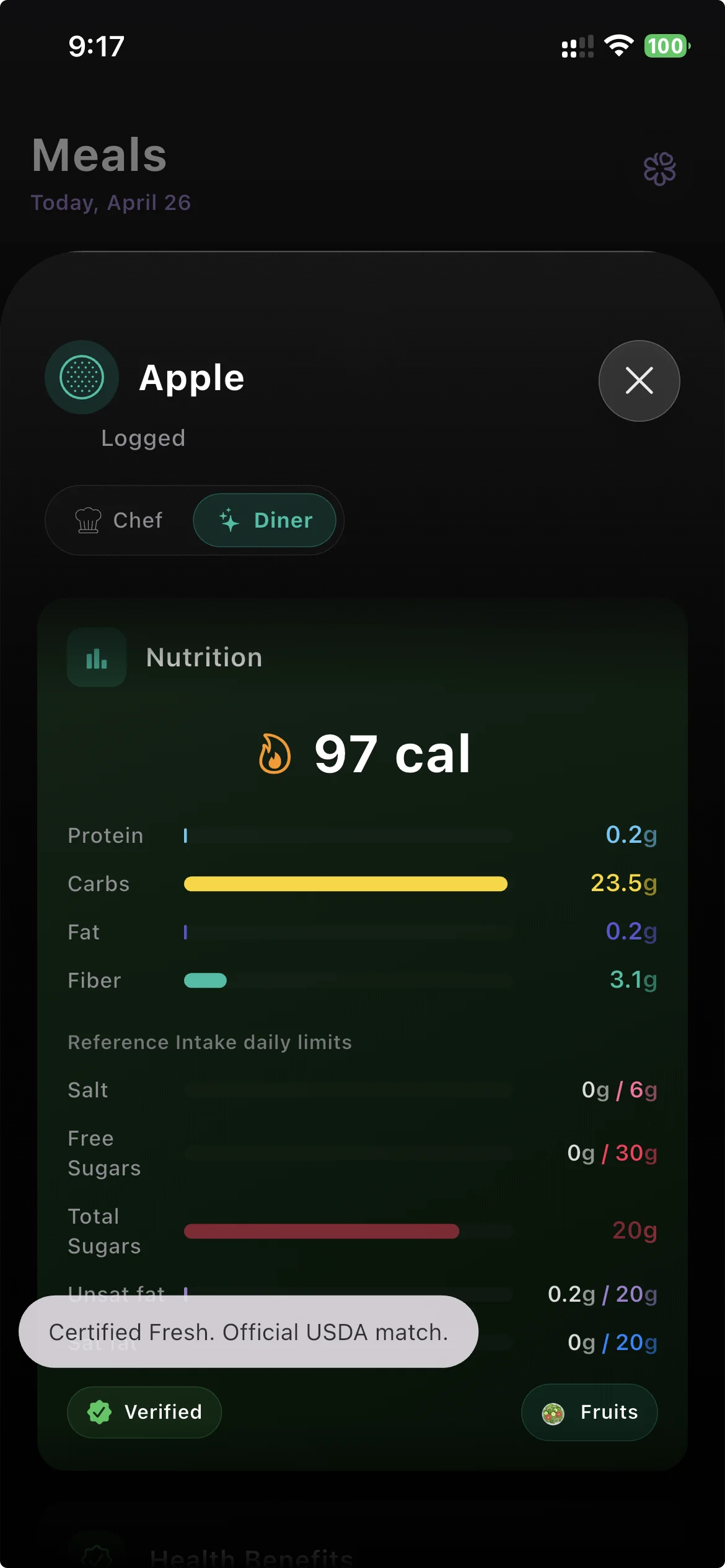
USDA Foundation Verified
When USDA Foundation data is available for a single ingredient, Getter links the entry directly to that verified source.
Look for the verified badge to get lab-tested calories and macros straight from the source. This is the exact data used by nutrition researchers.
Raw versus cooked weight
Raw and cooked weights are different numbers. If you weigh one form and log the other, the calories will drift.
Getter automatically defaults to the form you eat it in. If you log "rice", it logs cooked rice. It also gives you a raw/cooked toggle so you can match the entry to the scale.
- You do not need to type the state. Getter handles the default.
- Use the UI toggle to flip between raw and cooked after logging.
- If you want to force a state upfront, just type it: "150g raw chicken".
Daily analysis
HealthGuide shows what the day is missing
Calories tell you whether the day fits the target. HealthGuide shows what the day is missing.
After you log the day, Getter checks the targets that usually get missed: protein, fibre, free sugar, salt, fat, and plant foods. Tap Learn to see why each target exists instead of guessing from calories alone.
- Protein
- profile-based
- NHS adult baseline, personalised by profile and activity.
- Free sugar
- 30g/day max
- NHS adult limit.
- Salt
- 6g/day max
- NHS adult limit.
- Fibre
- 30g/day
- NHS adult goal.
Adjust the amount after you log the food
Log the food first. Adjust the amount when you know more.
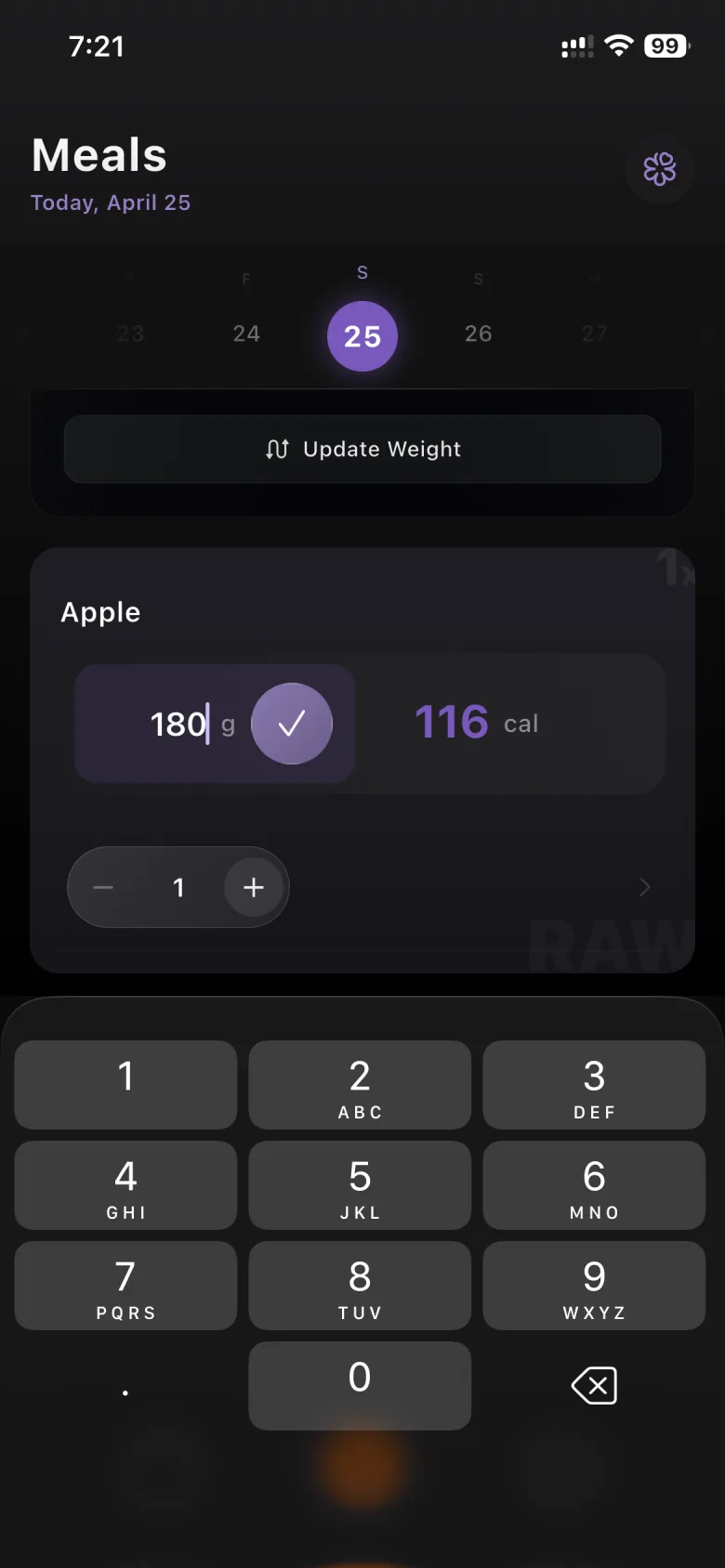
If you learn the weight later, update the meal
Once you know the weight, update the entry.
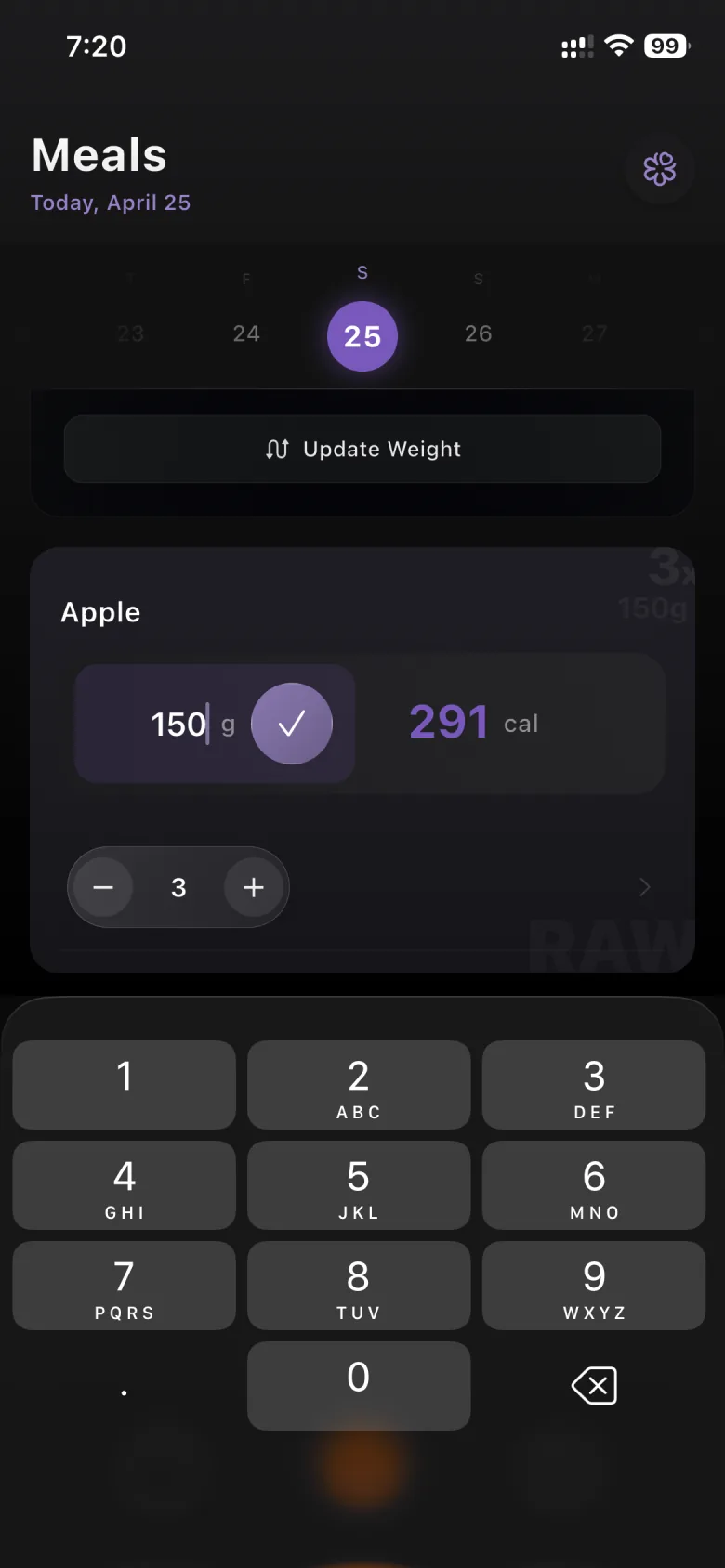
If you had the same food again, raise the count
Tap to increase the count.
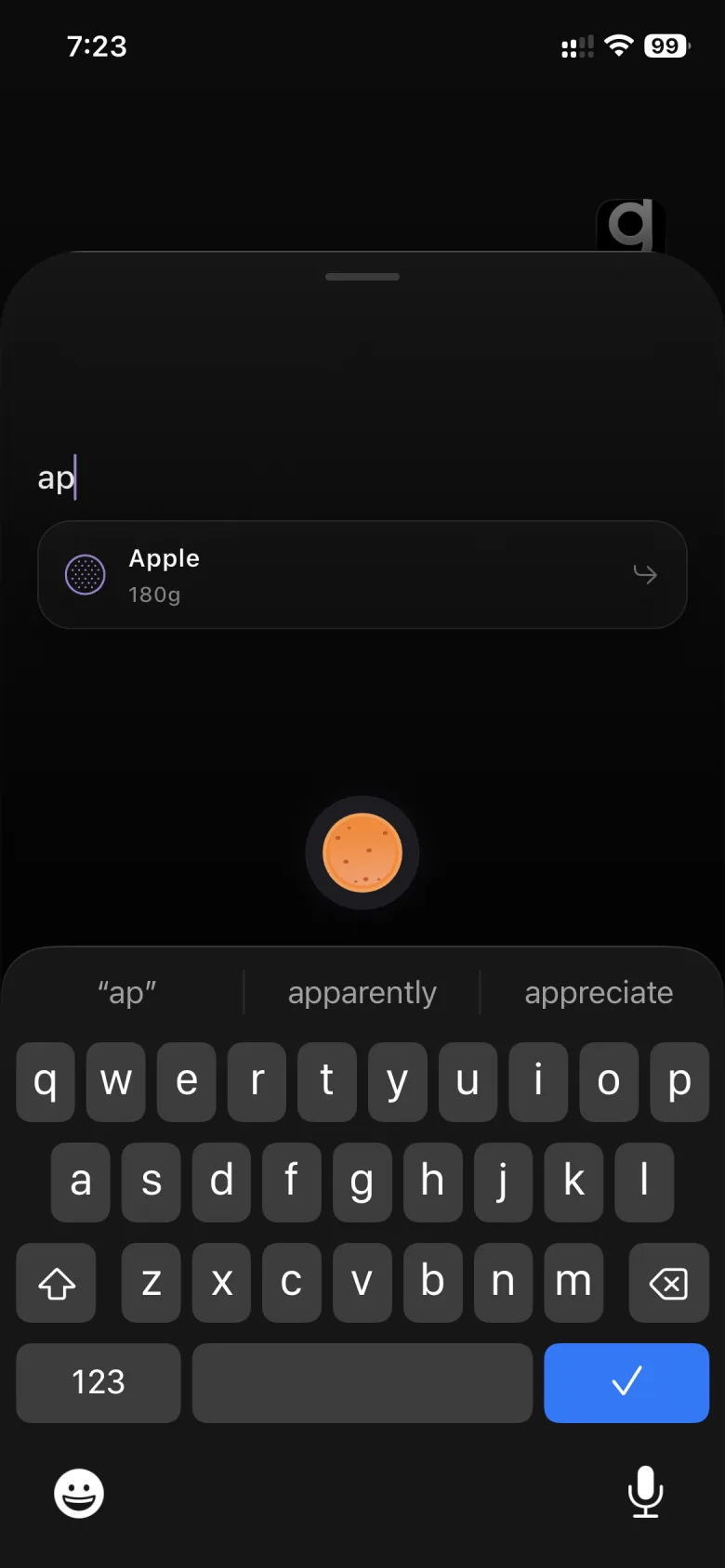
Foods you repeat show up faster next time
Previously logged foods reappear for quick reuse.
No Subscriptions
Get lifetime access to Getter.
Getter is a one-time purchase. No subscription renewals, no hidden terms. Pay once and keep it for long-term tracking.
$29.99
One-time purchase
Build one day of eating that fits the target
Log one day of meals that stays near your target using foods you already eat.
Pick meals you already cook and adjust portions until the total fits.
- 01Log the meals you expect to eat before the day starts.
- 02Adjust portions before eating, not after.
- 03Keep the foods you want and trim the parts that push calories up fast.
Start with foods you already eat
- 3 whole eggs
- 200 g vegetables
- 5 g olive oil
- 110 g chicken
- 75 g rice
- 100 g curd
- 300 g watermelon
- 30 g soya chunks
Type the planned day as plain food entries
3 whole eggs, 200 g vegetables, 5 g olive oil110 g chicken, 75 g rice, 100 g curd300 g watermelon, 30 g soya chunksLog the whole day before you eat it
3 whole eggs, 200 g vegetables, 5 g olive oil110 g chicken, 75 g rice, 100 g curd300 g watermelon, 30 g soya chunksIf the planned day is over your target, change portions before cooking.
Repeating meals makes the scale easier to audit
If you eat similar meals, it is easier to spot what changed when weight stalls.
Repeat one day before you design seven
- One breakfast, one lunch, one dinner. Repeat until the weight trend confirms the target works.
After 1 to 3 weeks, check body weight against the record. The CDC notes that people who lose weight gradually, about 1 to 2 pounds per week, are more likely to keep it off. Weight falling at that pace: the target is working. Weight flat: tighten amounts, review missed calories, review activity.
Keep the target through missed workouts and social meals
Every plan meets real life.
Movement supports health; food controls the deficit
- CDC and NHS both recommend at least 150 minutes a week of moderate activity, or 75 minutes vigorous.
- Include muscle-strengthening work on at least 2 days a week (CDC, NHS).
- NIDDK notes physical activity may not drive weight loss directly, but it helps maintain loss and improves health.
One missed day is not a failed week
- Keep foods you enjoy when their portions fit the day.
- Repeat meals on busy days so fewer choices depend on willpower.
- Return to the planned next meal when the plan breaks.
- Use averages instead of reacting to one day.
If the full training plan does not fit, use smaller movement you can repeat
If the full plan breaks, keep any movement.
Walking, stairs, errands on foot, and short strength sessions raise activity without replacing the need to eat less. Movement supports health, recovery, and maintenance.
Check your weight weekly. The CDC says setbacks happen. Get back on track at the next meal.
After one off-plan meal, return at the next meal
- Do not starve the rest of the day to “pay back” one meal.
- Do not treat one imperfect meal as the end of the week.
- Keep the method unchanged long enough for the trend to mean something.
If seven days are logged and weight is not moving, check the records before lowering calories.
Troubleshoot weight stalls before lowering calories
When weight is not moving, do not change the diet first. Check the records first.
- 01Check whether 2 to 3 full weeks have passed with complete logging.
- 02Check whether the weekly average is near the target or only near it on weekdays.
- 03Check oils, snacks, drinks, weekend spillover, and raw-versus-cooked mismatch.
- 04Check whether portion sizes drifted up after the first week.
- 05Check whether the activity setting is too high for what you are really doing.
- 06Only then lower calories a little, add movement, or both.
Belly fat falls with overall fat loss
You cannot target belly fat on its own. Reduce overall body fat and use the checklist above instead.
Before lowering calories again, check these common errors first.
The workout plan is too big for your week
What goes wrong: You skip all movement because the full training plan does not fit your life.
Fix: Keep intake visible and use movement you can repeat: walking, stairs, short strength sessions, and errands on foot.
You logged the wrong form or skipped small calories
What goes wrong: You enter raw rice as cooked, or you leave out oil, drinks, and sauces because they look too small to matter.
Fix: Match the entry to the way the food was measured and keep the small extras in the same log.
One weigh-in changed the whole plan
What goes wrong: You cut calories harder or change diets after one flat or noisy scale reading.
Fix: Use multi-week averages before you change the target.
You changed the diet before checking the numbers
What goes wrong: You switch diet styles before comparing seven days of usual eating with the target.
Fix: Find the biggest source of extra calories first, then fix that before changing everything else.
Why Getter exists in this workflow
The first coaching lesson that mattered was simple: eat less than you use, for long enough, and weight goes down.
Tracking turned that rule into something I could follow without a coach.
The hard part was logging food: mixed meals, drinks, and portion changes took too many steps.
Getter is an independent app created by someone who lost the weight and faced the impractical steps of tracking food.
What Getter removes from the workflow
- Log food without waiting for perfect portions.
- Tighten the amount later instead of rebuilding the day from scratch.
- Bring back repeated foods faster after you have logged them before.
- Keep drinks, mixed meals, and known-calorie foods inside the same total.
- Pre-log a full day before you eat it and fix the parts that push calories too high.
Why the logging problem mattered
This is the structured plan I received in 2021.
The value was not special food. The value was knowing exactly how much I was eating.
Getter does the same thing without the rigid PDF.
Open the full diet plan PDF (2 Aug 2021). Personal reference from that coaching period. Structure example, not a prescription.

Deljo Joseph

I built Getter after trying to make weight loss less confusing for myself. Apart from Getter, I spend time skateboarding, tinkering with RC cars, and sharing cooking on Instagram. This work follows established guidance from the NHS, CDC, and peer-reviewed research.

Active IQ Certificate in Fitness Instructing (Gym)
If you want fewer logging steps
Track your calories with Getter.
Getter is a one-time purchase. No subscription renewals, no hidden terms. Pay once and keep it for long-term tracking.
$29.99
One-time purchase
Appendix: Common questions
How much weight can I lose in a week?
The CDC uses 1 to 2 pounds a week as the safe gradual-loss range. Scale weight still moves unevenly because water, food volume, and sodium change day to day.
Should I just subtract 500 kcal a day?
Use 500 kcal below estimated needs as a starting hypothesis, not a rule. NIH and NIDDK explain that calorie needs change as body weight changes.
Can I lose weight without exercise?
Yes. Weight falls when average intake stays below expenditure. NIDDK also notes that physical activity may not have a big impact on weight loss itself, but it has important health benefits and may help keep weight off.
I am tracking calories. Why am I not losing weight?
Audit time, missed oils or drinks, weekend spillover, restaurant underestimation, portion drift, and whether the calorie target still matches current body weight and activity.
Does calorie tracking need to be perfect?
No. It needs enough detail to show your average intake. NHS guidance supports weighing portions, checking labels, and keeping a food diary long enough to understand what you are eating.
Should I track cooked or raw food?
Track whichever form the database entry is built for. If the entry is for raw rice, use raw rice. If the entry is for cooked chicken, use cooked chicken. The match matters more than memorizing one universal rule.
Do I need to stop eating rice, bread, or dessert?
No. The day needs to fit the target. Keep familiar foods when the portions fit the daily total.
What should I do after an off-plan meal?
Go back to the planned structure at the next meal. CDC guidance says setbacks happen and the right move is to get back on track quickly.
Do I need an expensive coaching program to start?
No. Coaching can provide structure, but the mechanism does not depend on coaching. Set a daily calorie target, log food, and review the body-weight trend.
What if I cannot follow a strict workout plan?
Weight can still go down without a strict workout plan. Use movement for health and strength; use food intake to create the deficit.
Medical Disclaimer: This content is for educational and informational purposes only. It is not intended as medical advice, diagnosis, or treatment. Always consult with qualified healthcare professionals before making any changes to your diet, exercise routine, or health regimen.
Author Credentials: Written by Deljo Joseph, Founder of Getter. Certification: Active IQ Level 2 Certificate in Gym Instructing (Certificate #177819): Verify Certification|Ofqual Register
Evidence Base: All recommendations are based on established guidelines from the NHS, Harvard Health, and CDC, supported by peer-reviewed research indexed on PubMed via NIH.
For full terms and conditions, please review our complete disclaimer.